What is Domestic Abuse and Am I Being Abused?
Recognising Domestic Violence and
What to Do
Victims of domestic abuse frequently search for answers to these questions.
This article addresses both questions and provides a short questionnaire to help you assess if your relationship may be abusive.
This article also provides contact details for organisations providing counselling and safe house accommodation in South Africa.
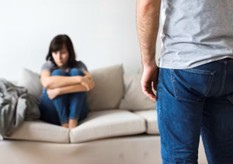
What is Domestic Violence?
Domestic Violence or Abuse is any form of non-consensual behaviour (abuse) carried out between people within a domestic relationship where the aim is to belittle, humiliate, control, hurt or in any other way, cause harm to one or mor people within that relationship.
What are the Different Types of Domestic Abuse?
Physical Abuse: pushing, hitting, choking, kicking – any form of physical harm inflicted by one person against another within a domestic relationship.
Verbal, Psychological & Emotional Abuse: behaviour that includes yelling, swearing, blaming (you for their behaviour), criticising, humiliating, shaming, insulting, gaslighting, intimidating you and/or threatening to harm you or others, such as family members or themselves.
Sexual Abuse: any form of non-consensual sexual act or physical touch, which includes sexual harassment, sexual assault, rape, sodomy, incest, grooming as well as the showing of pornographic material to minors and exposing oneself to minors.
The Domestic Violence Amendment Act, 2021 (Act no 14 of 2021), expanded the definition domestic violence to include the following forms of abuse:
Coercive Behaviour: when the abuser forced or compels the victim to abstain from (stop doing) OR to do anything that they have a lawful right to either not do or to do – preventing autonomy.
Controlling Behaviour: Behaviour that forced to the victim to become dependent on the abuser e.g. through social isolation, financial dependence, restricting freedom of movement, monitoring of the victim’s movements.
Economic Abuse: depriving or limiting the victim’s access to financial resources, employment, opportunities for employment and/or or education to enable employment and financial sustainability.
Exposing a Child to Domestic Violence: this refers to an abuser knowingly causing a child to see or hear domestic abuse and experience the impact of such abuse (refer to blog on Interpersonal Violence)
Elder Abuse: the abuse of an older person within a domestic relationship.
Related Person Abuse: This makes it possible for a person to take legal action against an abuser who threatens to commit physical violence or damage to property of that person.
Spiritual Abuse: where the abuser and/or victim’s religious or spiritual convictions and beliefs are used to justify or rationalise the abuse of the victim.

Am I Being Abused?
Abuse often begins subtly and escalates over time. Most abuse begins with gradual isolation and increasing verbal, emotional and psychological abuse.
A growing sense of unease, anxiety and fear of upsetting your partner are strong indicators that this relationship is not supportive of your well-being.
Complete this Self-Assessment Checklist to assess if you are in an abusive relationship.
Note, this is not a clinical screening assessment. It is a self-assessment guideline, indicating possible abusive behaviour within the relationship.
Select Yes or No:
Yes / No — My partner insults, belittles, or humiliates me.
Yes / No — My partner blames me for their behaviour.
Yes / No — My partner makes threats (to me, children, pets, or themselves).
Yes / No — My partner tries to isolate me from people I care about such as family and friends.
Yes / No — My partner controls money or blocks me from financial access.
Yes / No — My partner makes it hard for me to work or be independent.
Yes / No — My partner pressures or forces me into sexual activity.
Yes / No — My partner ignores my boundaries around touch and intimacy.
Yes / No — I often feel anxious, afraid, or unsafe around my partner.
Yes / No — My partner restricts or monitors my movements or takes my phone/keys.
If you answered “Yes” to even one or two questions, you may be experiencing unhealthy or abusive behaviour.
How to Get Help:
You do not need to suffer alone.
There is help available.
Support, Counselling and Safe Houses
Collaborative Counselling: 083 600 0191 (whatsapp) | email: in**@******************co.za
TEARS Foundation: 0800083277/ 1347355# (dial from any cell phone)
GBV Command Centre: 0800428418 / 1207867# (any cell phone)
POWA (Gauteng): 0111 6424345/6 Note: Also a safe house
Saartjie Baartman Centre for Women and Children (Cape Town): 021 633 1253 Note: Also a safe house
Open Door Crisis Centre (KZN): 084 409 2679
Sahara Shelter (KZN): 031 500 3671 Note: Also a safe house
For more information contact Tracey at: tr****@******************co.za